Wondering which trees would look amazing in your yard? These 15 backyard trees add unbelievably beautiful shade to almost any outdoor space.
The right tree can change everything about your backyard, taking it from a one-dimensional space to a layered, vibrant, textured outdoor haven. Whether you want shade on a hot afternoon, a pop of color in fall, or something that makes the neighbors do a double take, there’s a tree that fits the bill. Here’s a look at 15 stunning trees you can plant in your backyard, along with what makes each one worth considering.
Know Your Hardiness Zone First
Before we get into the good stuff, here’s a quick note: check your USDA hardiness zone before buying a tree. It tells you which plants can survive your climate, and not all of the trees in this list are fit for every hardiness zone.
Japanese Maple
If you want a tree that stops people in their tracks, the Japanese maple will get the job done. It stays compact (usually 6 to 25 feet, depending on the variety), so it works in smaller yards. Its lacy, deeply cut leaves shift from red to orange to burgundy as the seasons change. Plant it in partial shade for the best color payoff.
Dogwood
Dogwoods are early bloomers that put on a spectacular show in spring. White or pink flowers blanket the branches before the leaves even appear, making the whole tree look like it’s floating. They top out around 20 to 30 feet, and in fall, the foliage turns a rich reddish-purple. They’re happiest in well-drained soil with a little afternoon shade.
Crape Myrtle
If you’re in a warmer climate (zones 6 through 9), crape myrtles are basically the quintessential summer tree. They produce dense clusters of ruffled flowers in white, pink, red, or purple from late spring through fall. They’re also drought-tolerant once established, which means less work for you once they’re settled in.
Eastern Redbud
The eastern redbud earns its name. Before the leaves come in, the entire tree covers itself in tiny neon magenta-pink blooms directly on the branches and trunk, which is unusual and unbelievably striking. It’s a smaller tree (around 20 to 30 feet), and it tolerates a range of soil types, so it’s pretty forgiving for newer gardeners.
River Birch
River birch is one of those trees that looks interesting year-round. Its bark peels in papery layers of cream, salmon, and brown, giving it a lot of visual texture even in winter when everything else is bare. It grows quickly, handles wet soil well, and can reach 40 to 70 feet at maturity. That fast growth is part of its appeal, but it also means river birch tends to develop dead branches more readily than slower-growing species. It’s worth learning how to remove dead branches safely before any issues get out of hand.
Saucer Magnolia
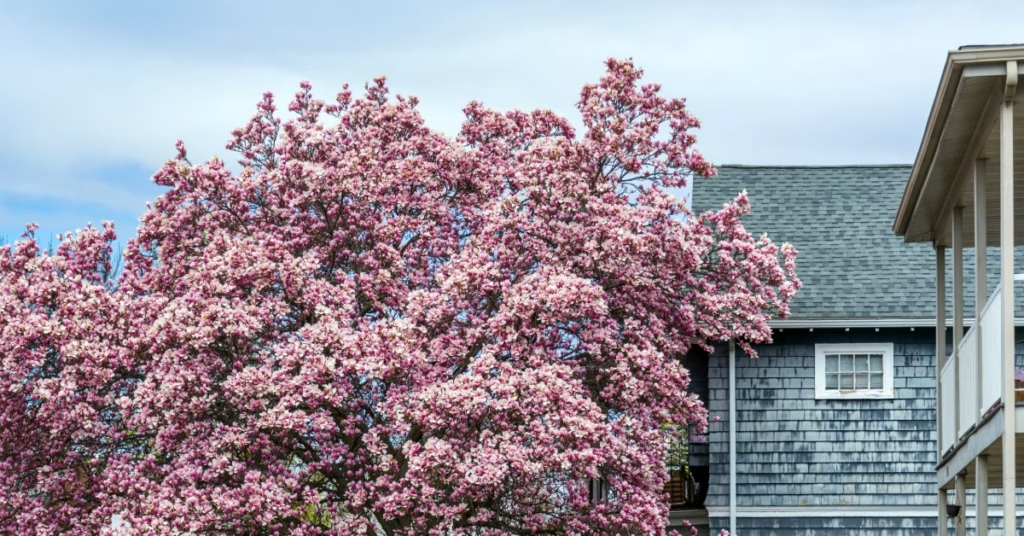
The saucer magnolia blooms in late winter or early spring, and it’s one of the most dramatic flowering trees you can grow. The large, tulip-shaped flowers open in white, pink, or deep purple before the leaves arrive, covering the whole canopy at once. It prefers full sun and well-drained soil and typically grows 20 to 30 feet tall.
American Sweetgum
If fall color is your priority, the sweetgum delivers. Its star-shaped leaves turn yellow, orange, red, and purple simultaneously, often all on the same tree. It’s a large tree (up to 75 feet), so it needs room to grow, but it’s one of the most visually impressive options on this list in the right space.
Serviceberry
The serviceberry is a multi-season performer that most homeowners overlook. It produces white flowers in early spring, edible berries in early summer (birds love them too), and fiery orange-red fall color. It works as a small tree or large shrub, depending on how you prune it, and it tolerates partial shade without complaint.
Ornamental Pear (Cleveland Select)
The Cleveland Select pear is a tidy, upright tree with a narrow profile, which makes it ideal for smaller yards or spots near driveways and walkways. It produces white flowers in spring and holds its glossy green leaves well into fall before turning deep red or orange. Unlike the Bradford pear, this variety is more structurally sound and less prone to splitting.
Weeping Cherry
Weeping cherries are exactly what they sound like: a cascading curtain of branches draped with pink or white blossoms every spring. They’re typically 20 to 30 feet tall with a wide, drooping canopy that makes a strong focal point in any yard. They need full sun and good drainage but are otherwise fairly low-maintenance.
Black Gum (Nyssa Sylvatica)
The black gum tree is a native species that’s seriously underrated. Its fall foliage is some of the most vivid you’ll find anywhere, cycling through yellow, orange, scarlet, and purple before the leaves drop. It’s also a wildlife magnet. Bees, birds, and butterflies rely on it for both nectar and fruit throughout the season.
Lacebark Elm
The lacebark elm is a tough, adaptable tree with excellent disease resistance and a graceful, vase-shaped canopy. Its bark is one of its best features: it exfoliates in patches of gray, green, orange, and brown, creating a mosaic pattern that looks great year-round. It grows 40 to 50 feet tall and handles heat, drought, and urban conditions better than most trees.
White Oak
If you’re planting a tree for the long haul, the white oak is hard to beat. It grows slowly but lives for hundreds of years, eventually reaching 60 to 100 feet with a massive, spreading crown that provides serious shade. The fall color is a warm reddish-brown, and the acorns feed more wildlife species than almost any other native tree in North America.
Tulip Poplar
The tulip poplar grows fast, towers tall (up to 90 feet), and produces unique, tulip-shaped flowers with orange markings at the base. It’s one of the largest native trees in the eastern US, and it’s a pollinator favorite in late spring. Give it plenty of room and full sun, and it’ll reward you with impressive height and canopy in a relatively short time.
Autumn Blaze Maple
The last stunning tree you can plant in your backyard that we want to mention is the Autumn Blaze. This is a hybrid maple bred for speed and color. It grows 2 to 3 feet per year under good conditions and turns a brilliant, uniform orange-red every fall. It handles cold winters and hot summers without much fuss, tolerates a range of soil types, and reaches 40 to 55 feet at maturity. For homeowners who want a big, beautiful shade tree without waiting decades, this one’s worth a look.