Are you looking to finally finish your basement? Before you do, explore our guide on key considerations when finishing your basement for a regret-free project.
A basement can become the hardest-working space in the house. It can serve as a movie room, guest suite, play area, home gym, office, or that quiet corner you claim as your own when the rest of the house gets noisy. But before you start picking paint colors or dreaming up the perfect sectional, it helps to slow down and think through the details that shape a good renovation. Keep reading to understand the key considerations when finishing your home’s basement, from moisture to ceiling height and more.
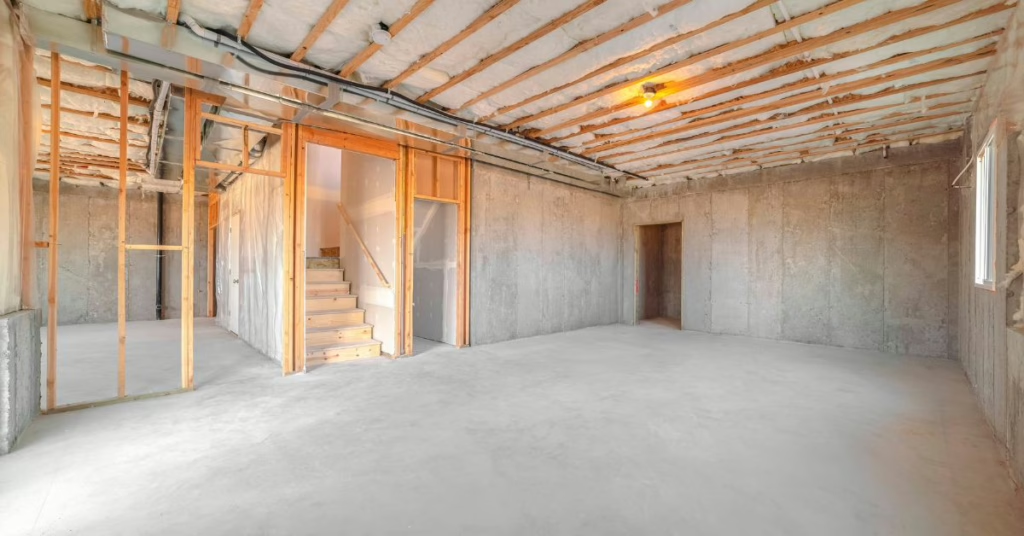
Start With Moisture, Not Mood Boards
It is tempting to jump straight into design inspiration, but the first thing to check is moisture. Basements sit below grade, so they deal with a completely different environment than the rest of the home. Even a space that seems dry can hide small leaks, damp walls, condensation, or drainage issues.
Before any framing, flooring, or drywall goes in, inspect the basement for signs of water staining, musty smells, peeling paint, or damp concrete. Fixing those problems at the start protects every finish that comes later. It also saves you from the heartbreak of replacing materials after the you finish the project.
Decide What the Space Needs to Do
The best basement designs begin with function. Instead of asking how the room should look, ask how it should work. Will it be your guest suite for hosting guests, a place for the kids and friends to hang out, or an office area where you can work without disruption from the rest of the household? Your answer will shape everything from layout to lighting to flooring.
A home gym needs durable surfaces and good ventilation. A family lounge needs comfort, storage, and screen-friendly lighting. A guest suite may need privacy, a bathroom, and sound control. When you define the purpose early, you avoid a random mix of features that never quite come together.
Plan the Layout Around Real Life
A basement can feel spacious one minute and awkward the next. Support columns, low ceilings, stair placement, utility rooms, and window size all affect the layout. Instead of fighting those elements, work with them. Think about how people will move through the space.
Give major furniture zones enough breathing room. Keep access to electrical panels, sump pumps, and mechanical systems easy. If you plan to divide the basement into separate areas, create natural transitions instead of chopping the room into tight little boxes. An open layout can make a lower level feel bigger, but defined zones can make it feel more intentional.
Pay Attention to Ceiling Height and Headroom
Ceiling height changes how a basement feels more than almost any other feature. A low ceiling can make a finished space feel compressed, while a little extra height can make it feel like a true extension of the main floor.
If your basement has ductwork, beams, or pipes running below the joists, think carefully about how you want to handle them. In some designs, a dropped ceiling works well. In others, painted exposed ceilings create a more relaxed, modern look. Neither choice is wrong. What matters is that the solution feels intentional.
Do Not Treat Lighting as an Afterthought
Basements rarely get generous natural light, so the lighting is a key consideration when finishing your home’s basement. One ceiling fixture in the middle of the room will not cut it. You need a basement lighting idea that makes a big impact.
Use ambient lighting to brighten the room overall, task lighting where people read, work, or play games, and accent lighting to add warmth and dimension. Recessed lights keep ceilings looking clean. Wall sconces soften darker corners. Lamps and under-shelf lighting can make the room feel less like a basement and more like a true living space.
Choose Materials That Handle Basement Conditions
Not every material belongs in a basement. Since lower levels can deal with cool temperatures, shifting humidity, and less airflow, pick finishes that can handle those conditions without drama.
Flooring deserves extra thought. Carpet can feel cozy, but it may not suit every basement. Luxury vinyl plank, tile, and engineered options tend to work better in spaces where durability matters. For walls, moisture-resistant drywall and quality insulation can improve both comfort and performance.
Think About Comfort Beyond Decor
A finished basement should not just look nice in photos. It should feel good to spend time in. That means thinking about temperature, airflow, sound, and insulation.
Basements can run cooler than the rest of the house, so you may need to extend HVAC coverage, improve insulation, or add supplemental heating depending on the space. Soundproofing also makes a big difference, especially if the basement will become a media room, music area, office, or teen hangout. This is where practical decisions make the design feel luxurious. Warm floors, quieter rooms, and balanced air flow create a space people actually want to use every day.
Build Storage into the Plan
Every basement collects things. Holiday decorations, extra linens, sports gear, luggage, keepsakes, seasonal clothes, and random items that seem to migrate downstairs all need somewhere to go. If you do not include storage in the design, clutter will move in fast.
Built-ins, under-stair cabinets, closed shelving, and designated utility closets help the room stay calm and functional. Storage does not have to feel boring either. When you design it well, it blends into the room and prevents the practical parts of the basement from burying the stylish elements.
Keep Permits, Codes, and Safety in View
This part may not feel glamorous, but it matters. Basement projects can involve electrical work, plumbing, egress requirements, insulation standards, and fire safety rules. If you plan to add a bedroom or guest suite, local code may require proper emergency exits and ceiling clearances.
Following housing codes protects your home, your investment, and the people using the space. It also makes life easier if you sell the home later. A finished basement should add confidence, not questions.
The Best Basement Feels Like It Belongs
The real goal is not just to finish the basement. It is to make it feel like the space is a connection to the rest of your home. When the layout flows, the lighting feels warm, the materials suit the space, and the room serves a real purpose, the basement stops feeling like a forgotten lower level. It starts feeling like one of the best rooms in the house.
That is the sweet spot. A basement should work hard, look inviting, and feel like it has always belonged there.